THE IMMORTALS OF THE AMERICAN SPORTS HALL OF FAME

Jesse Owens (1913–1980) Track & Field | Ohio, USA
Jesse Owens stands as one of the most transformative figures in the history of sport—an athlete whose excellence redefined competitive limits and whose courage reshaped the global meaning of athletic achievement.
Born James Cleveland Owens in 1913, he rose from modest beginnings in Cleveland, Ohio, to become the preeminent track and field athlete of his generation. From his earliest scholastic competitions at Fairmount Junior High School and East Technical High School, Owens displayed an extraordinary combination of speed, power, and technical precision. Despite economic hardship, he set multiple national high school records in the 100-yard dash, 220-yard dash, and broad jump (long jump), establishing himself as the premier scholastic track athlete in the United States and signaling the arrival of a generational talent whose range extended far beyond specialization.
Owens’ collegiate career at Ohio State University elevated him from prodigy to legend. Between 1933 and 1936, he became an eight-time NCAA champion and dominated the Big Ten Conference in both sprinting and field events. On May 25, 1935, in Ann Arbor, Michigan, Owens produced what is widely regarded as “the greatest 45 minutes in sports.” Within that astonishing span, he tied one world record and set three others: the 220-yard dash, the 220-yard low hurdles, and the long jump. His long jump of 26 feet, 8¼ inches stood as the world record for 25 years—an enduring testament to his biomechanical brilliance and explosive versatility. That same year, he was named Amateur Athletic Union (AAU) Champion and Associated Press Athlete of the Year.
Owens entered the 1936 Summer Olympic Games in Berlin as the world’s dominant track athlete. Competing under extraordinary political and social scrutiny, he delivered one of the most iconic performances in Olympic history. He won four gold medals—in the 100 meters, 200 meters, long jump, and 4×100 meter relay—becoming the first American track athlete to achieve four gold medals at a single Olympic Games. In doing so, he set or equaled nine Olympic records and demonstrated unmatched composure and versatility on the sport’s grandest stage.
Beyond medals and records, Owens’ triumphs carried profound historical resonance. At a moment when the world stood at a crossroads of ideology and division, his victories affirmed the universal values of sport—fairness, excellence, and human dignity. He did not merely win races; he elevated the Olympic ideal itself, proving that athletic greatness transcends race, nationality, and politics.
Following his competitive career, Owens became an international ambassador for sport, character, and opportunity. His legacy extended well beyond the track, inspiring generations of athletes and shaping the moral framework through which sport is viewed as a force for unity and progress.
Among his many honors, Owens was inducted into the United States Olympic & Paralympic Hall of Fame and the National Track and Field Hall of Fame, awarded the Presidential Medal of Freedom posthumously, and recognized worldwide through statues, schools, and commemorative awards bearing his name.
Jesse Owens’ legacy is defined not only by what he accomplished, but by what he represented. His records defined an era; his courage defined a moment in history. He remains a foundational figure in Olympic lore and a timeless standard for excellence in global athletics.

Mildred “Babe” Didrikson Zaharias (1911–1956)
Mildred “Babe” Didrikson Zaharias stands among the most versatile and accomplished athletes in modern sports history—a pioneering force whose extraordinary talent redefined the possibilities of women’s athletics. Across track and field, golf, basketball, and beyond, Zaharias shattered records, challenged conventions, and expanded the boundaries of competitive sport.
Born in 1911 in Port Arthur, Texas, Zaharias displayed exceptional athletic ability from childhood. Her speed, strength, coordination, and competitive fire set her apart early, as she excelled in track, basketball, baseball, and tennis. Even as a teenager, it was evident that her abilities extended far beyond specialization; she possessed a rare combination of explosive power and technical control that would soon command national attention.
Her rise to prominence began in track and field. At the 1932 U.S. Olympic Trials, Zaharias set multiple world records, earning her place on the American team for the Los Angeles Olympic Games. There, she delivered one of the most remarkable performances in Olympic history. She won gold medals in the 80-meter hurdles and the javelin throw and captured a silver medal in the high jump—an unprecedented demonstration of multi-event dominance. Widely regarded as the greatest female athlete at the 1932 Games, she emerged as an international icon. Throughout the early 1930s, Zaharias claimed 17 national AAU championships across sprints, hurdles, javelin, and jumping events, repeatedly breaking records and establishing herself as the definitive standard of excellence in women’s track and field.
Her athletic achievements extended beyond the Olympic arena. In basketball, she starred for the Employers Casuals, leading the AAU team to national championships with her scoring ability and unmatched versatility. She also participated in baseball and basketball exhibitions, frequently competing in traditionally male-dominated settings and demonstrating that athletic excellence transcended gender barriers.
By the mid-1930s, Zaharias turned her focus to golf, applying her relentless work ethic and natural athleticism to master an entirely new discipline. Her transition was swift and extraordinary. She won the 1946 U.S. Women’s Amateur and the 1947 British Ladies Amateur—the first American to do so—along with multiple Women’s Western Opens. Turning professional in 1947, she quickly established dominance on the emerging women’s tour. Over her career, she amassed 82 professional tournament victories, including 10 major championships. Among her most extraordinary accomplishments came at the 1954 U.S. Women’s Open, where—despite recovering from colon cancer surgery and competing with a colostomy bag—she won by an astonishing 12 strokes. The performance remains one of the most courageous and remarkable feats in the history of sport.
In 1950, Zaharias became a founding member of the Ladies Professional Golf Association (LPGA), helping to establish the foundation of modern women’s professional golf. Her prodigious drives, strategic precision, and fierce competitiveness elevated the sport’s profile and expanded opportunities for generations of female athletes. She not only dominated competition but transformed the visibility, credibility, and professional structure of women’s sports.
Her accolades reflect the breadth of her influence. Zaharias was named Associated Press Female Athlete of the Year multiple times and was later recognized as the Woman Athlete of the 20th Century. She was inducted into the World Golf Hall of Fame as an original LPGA Hall of Fame inductee and honored by numerous institutions, including the United States Olympic & Paralympic Hall of Fame. In 2021, she was posthumously awarded the Presidential Medal of Freedom, recognizing her profound impact on athletics and American culture.
Babe Didrikson Zaharias’ legacy transcends statistics. She set records that defined an era, broke barriers that reshaped opportunity, and embodied a relentless pursuit of excellence that continues to inspire. Her career stands as a testament to boundless versatility, resilience, and trailblazing achievement—an enduring reminder that greatness in sport knows no limits.

Jack Nicklaus (1940– ) Golf | Florida, USA
Jack Nicklaus, known worldwide as “The Golden Bear,” stands as the definitive figure in the history of professional golf. Across more than two decades of elite competition, Nicklaus redefined championship excellence, established records that remain unmatched, and set the enduring standard by which major champions are measured.
Born in 1940 in Columbus, Ohio, Nicklaus demonstrated prodigious talent from an early age. As a junior and amateur competitor, he quickly distinguished himself through a rare combination of power, precision, and strategic intelligence. He claimed Ohio State High School championships in 1956 and 1957, won the Western Amateur twice (1958, 1959), captured two U.S. Junior Amateur titles (1959, 1961), and earned a gold medal at the 1958 World Amateur Team Championship. These achievements signaled the emergence of a competitor whose mental discipline and technical mastery would soon transform the sport.
At Ohio State University, Nicklaus elevated collegiate golf to new prominence. He won the NCAA Individual Championship in 1961, secured three consecutive Big Ten titles (1959–1961), and earned First-Team All-American honors each year. In 1960, as an amateur, he finished runner-up at the U.S. Open—an extraordinary accomplishment that included defeating legendary figures such as Ben Hogan in an 18-hole playoff. That performance foreshadowed the dominance that would define his professional career.
Turning professional in 1961, Nicklaus swiftly reshaped the PGA Tour landscape. Over his career, he amassed 73 PGA Tour victories and an unprecedented 18 major championships—the most in golf history. His major victories include six Masters Tournament titles (1963, 1965, 1966, 1972, 1975, 1986), four U.S. Opens (1962, 1967, 1972, 1980), three Open Championships (1966, 1970, 1978), and five PGA Championships (1963, 1971, 1973, 1975, 1980). He completed the career Grand Slam by age 26, becoming the youngest player at the time to achieve the feat.
Beyond his record-setting 18 major victories, Nicklaus’s consistency and longevity remain unparalleled. He finished runner-up in major championships 19 times and recorded 37 top-three finishes. He placed in the top 10 of majors 73 times and, in 1971, became the only golfer to finish second or better in all four majors in a single season. His accolades include five PGA Tour Player of the Year awards and eight Vardon Trophies for lowest scoring average, reflecting sustained excellence across multiple eras of competition.
Nicklaus also elevated international team play. He represented the United States in six Ryder Cups as a player and once as captain, and he won the World Cup of Golf six times. His leadership and sportsmanship enhanced the prestige of global competition while reinforcing his reputation as both champion and ambassador.
His influence extended far beyond tournament victories. Nicklaus helped define the modern model of championship golf—combining power with precision, strategic course management, and mental resilience. He raised professional standards in preparation, conditioning, and competitive conduct. As a course architect and mentor, he shaped the global development of the sport, leaving a lasting imprint on golf’s design, instruction, and culture.
Recognition of Nicklaus’s legacy is extensive. He was inducted into the World Golf Hall of Fame in 1974 and honored by multiple national and professional institutions. He received the Presidential Medal of Freedom in 2005 and the Congressional Gold Medal in 2015—distinctions reflecting not only athletic excellence but profound cultural impact. In 1999, he was named PGA Tour Player of the Century.
Jack Nicklaus is more than a champion by record; he is the enduring benchmark of golf achievement. His career embodies precision, resilience, and a relentless commitment to excellence. Through sustained dominance, historic victories, and transformative influence, he established a legacy that transcends statistics. In every sense, Jack Nicklaus remains the ultimate standard of championship golf—his name forever synonymous with greatness in the sport.
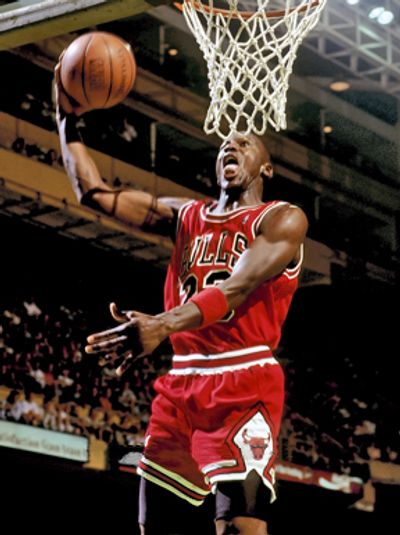
Michael Jordan (1963– ) Basketball | Florida, USA
Michael Jordan stands as the definitive standard of excellence in the history of basketball. Widely regarded as the greatest player the sport has produced, Jordan combined individual brilliance, flawless championship execution, and transformative global influence to redefine competitive greatness. His career is not merely historic—it remains the benchmark against which all basketball achievement is measured.
Born in 1963, Jordan first emerged as a national figure at the University of North Carolina. As a freshman in 1982, he delivered one of the most iconic moments in collegiate sports history, scoring the game-winning shot in the NCAA Championship Game against Georgetown. By his junior season, he was the consensus National Player of the Year, ACC Player of the Year, and a First-Team All-American. His collegiate career signaled the arrival of a generational competitor defined by composure under pressure and an uncompromising will to win.
Selected third overall in the 1984 NBA Draft by the Chicago Bulls, Jordan transformed a struggling franchise into a global dynasty. Over 15 NBA seasons, he secured six NBA championships and was named Finals MVP in each title run—an unprecedented 6–0 record in the Finals. He earned five regular-season MVP awards, led the league in scoring ten times, and holds the highest career scoring average in NBA history at 30.1 points per game. His dominance extended to the defensive end, where he was named Defensive Player of the Year in 1988 and selected to nine All-Defensive First Teams, establishing a rare two-way standard for elite guards.
Jordan’s competitive peak produced two historic three-peat championship runs (1991–1993; 1996–1998), highlighted by the 72–10 Chicago Bulls season of 1995–96—long regarded as one of the greatest team campaigns in professional sports history. His ability to elevate performance in decisive moments, particularly in postseason play, became known simply as the “Jordan Standard”—the expectation that greatness must be delivered when stakes are highest.
Internationally, Jordan’s impact was equally profound. He won Olympic gold medals in 1984 and 1992, serving as a central figure on the 1992 U.S. “Dream Team.” That undefeated Olympic campaign in Barcelona did more than secure a championship; it accelerated basketball’s global expansion and established the NBA as an international cultural force. Jordan became the face of the sport worldwide, inspiring generations of players across continents.
Beyond statistics and trophies, Jordan reshaped basketball’s competitive mentality and commercial reach. He elevated professional preparation, intensified standards of leadership, and transformed the NBA into a premier global league. His influence extended into marketing, branding, and the global business of sport, permanently altering how basketball is played, promoted, and understood.
Recognition of his contributions is comprehensive. Jordan has been inducted into the Naismith Memorial Basketball Hall of Fame and the United States Olympic & Paralympic Hall of Fame, and into the FIBA Hall of Fame for his international impact. He was named to the NBA’s 50th and 75th Anniversary Teams, acknowledgments reserved for the most consequential figures in league history. At the collegiate and regional level, he has been honored by the North Carolina Sports Hall of Fame, North Carolina Basketball Hall of Fame, and Chicago Sports Hall of Fame—reflecting the breadth of his influence.
Michael Jordan’s legacy is foundational rather than comparative. His career defined the upper limits of basketball achievement and reshaped the sport’s global trajectory. Through sustained dominance, championship perfection, and cultural transformation, he established a permanent standard for excellence. In every era of comparison, his name endures as the ultimate measure of greatness in basketball.

Eldrick “Tiger” Woods (1975– ) Golf | Florida, USA
Tiger Woods stands as one of the most dominant and transformative figures in the history of global sport. Across youth, amateur, collegiate, and professional golf, Woods established unprecedented standards of competitive excellence while permanently reshaping the cultural, commercial, and athletic landscape of the game.
From early childhood, Woods displayed a level of technical precision and competitive poise rarely seen in any athlete. As a junior golfer, he won the Junior World Golf Championships six times, often competing successfully against older age divisions. His dominance reached historic levels when he became the first player ever to win three consecutive U.S. Junior Amateur Championships (1991–1993), establishing himself as the most accomplished junior golfer of his generation.
His amateur career only deepened that legacy. Woods captured three consecutive U.S. Amateur Championships (1994–1996), becoming the only golfer in history to hold the U.S. Junior Amateur and U.S. Amateur titles simultaneously for three straight years. At Stanford University, he won the 1996 NCAA Individual Championship, was named Pac-10 Player of the Year, and earned recognition as Stanford Male Athlete of the Year. Even before turning professional, Woods had secured a place among the greatest amateur golfers in history.
When Woods turned professional in 1996, he immediately altered the competitive landscape of the PGA Tour. In 1997, at just 21 years old, he became the youngest Masters champion in history and set the record for the lowest 72-hole score in major championship history. Over his professional career, Woods amassed 82 PGA Tour victories—tying the all-time record—and more than 110 professional wins worldwide. He captured 15 major championships: five Masters titles, three U.S. Opens, three Open Championships, and four PGA Championships.
Among his most historic achievements was the “Tiger Slam,” holding all four major championships simultaneously (1997–2001), a feat unmatched in the modern era. Woods spent a record 683 total weeks ranked World No. 1, including 281 consecutive weeks—an extraordinary measure of sustained dominance across multiple competitive eras. He earned 11 PGA Tour Player of the Year awards, 11 Vardon Trophies, and 10 Byron Nelson Awards, further underscoring his consistent superiority.
His career also includes one of the most significant comeback victories in sports history. In 2019, after years of injuries and multiple surgeries, Woods won The Masters in a triumph widely regarded as one of golf’s most emotionally resonant and historically meaningful moments. The victory reaffirmed his resilience and competitive resolve, reinforcing his standing among the sport’s immortals.
Beyond statistics, Woods transformed golf globally. He elevated physical conditioning, mental preparation, and competitive intensity to new standards. His presence expanded television audiences, sponsorship economics, and international participation. Woods inspired unprecedented growth in junior golf and broadened the sport’s demographic reach, becoming one of the most recognizable and influential athletes of the modern era.
Recognition of his contributions culminated in his induction into the World Golf Hall of Fame in 2022, the sport’s highest honor, acknowledging both his competitive dominance and transformative impact. He was also inducted into the California Hall of Fame, reflecting his broader cultural and international influence.
Tiger Woods’ legacy transcends victories and records. He redefined excellence, reshaped golf’s global identity, and established a competitive standard that endures. Through sustained dominance, historic achievement at every level of play, and an unparalleled cultural footprint, Woods stands not only as one of golf’s greatest champions, but as one of the most consequential athletes in the history of sport.

George Herman "Babe" Ruth (1895-1948) Baseball | New York, USA
George Herman “Babe” Ruth Jr. stands as the most transformational figure in the history of baseball and one of the most influential athletes in all of sport. His extraordinary career reshaped competitive standards, altered strategy, and helped elevate baseball into America’s defining national pastime. Ruth’s legacy is distinguished not only by his unprecedented statistical achievements, but by the profound way he changed how the game itself was played, understood, and celebrated.
Ruth entered Major League Baseball in 1914 as a dominant left-handed pitcher with the Boston Red Sox. Over six seasons in Boston, he compiled a remarkable pitching record of 94–46 with a 2.28 earned run average, establishing himself as one of the premier pitchers of his era. He played a pivotal role in the Red Sox dynasty of the 1910s, helping lead the club to three World Series championships (1915, 1916, and 1918). In postseason play, Ruth demonstrated exceptional composure and endurance, setting a World Series record with 29⅔ consecutive scoreless innings, a mark that stood for more than four decades.
Even before his offensive emergence, Ruth was already one of the most valuable players in professional baseball.
His transition from pitcher to full-time position player marked the single greatest competitive shift in the history of the sport. Beginning in 1920 with the New York Yankees, Ruth revolutionized baseball by introducing power hitting on a scale never before seen. At a time when the game emphasized bunting, base running, and contact hitting, Ruth transformed offensive strategy through his extraordinary home run production and unmatched ability to drive the ball.
By the end of his career, Ruth had hit 714 home runs, a total that stood as the all-time Major League record for nearly forty years. His .690 career slugging percentage and 1.164 OPS remain the highest marks in Major League Baseball history, reflecting a level of offensive dominance unmatched across eras.
Ruth’s career achievements illustrate overwhelming superiority at the plate. He finished with a .342 lifetime batting average, 2,873 hits, 2,213 runs batted in, and 5,793 total bases, which at the time represented the highest total in Major League history. He led the American League in home runs twelve times and in RBIs six times, and he captured the league’s Most Valuable Player Award in 1923. His 1927 season, during which he hit 60 home runs, became one of the most iconic achievements in sports history and remained the single-season record for 34 years.
Beyond individual statistics, Ruth played a central role in building one of the greatest dynasties in sports. With Ruth as its centerpiece, the New York Yankees emerged as baseball’s premier franchise, winning four World Series championships during his tenure (1923, 1927, 1928, and 1932). His immense popularity helped drive record attendance and media coverage, turning Yankee Stadium into a national landmark famously known as “The House That Ruth Built.”
Ruth’s influence extended far beyond the playing field. His dynamic personality and extraordinary athletic feats helped transform baseball into a central pillar of American culture during the early twentieth century. Ruth became the first athlete whose fame transcended sport, establishing the blueprint for modern sports celebrity.
He also played a foundational role in the development of the sports memorabilia and collectibles industry. During his career, signed baseballs, bats, and photographs bearing Ruth’s name became highly sought after by fans. In the decades following his retirement and death, Babe Ruth artifacts became some of the most valuable and historically significant items in sports collecting, often commanding record-breaking prices at auction. His enduring fame helped establish modern concepts of athlete branding, autograph authentication, and the investment value of historic sports memorabilia.
In recognition of his unparalleled impact on the game, Ruth was elected as one of the inaugural members of the National Baseball Hall of Fame in 1936.
More than any other athlete of his generation, Babe Ruth expanded the possibilities of professional sport. His unprecedented power, championship legacy, and cultural influence permanently altered baseball and helped shape the modern world of athletics.
George Herman “Babe” Ruth remains one of the most iconic and consequential figures in the history of sport.

Mohammed Ali (1942-2016) – Boxing | Kentucky, USA
Few athletes in history have transcended sport the way Muhammad Ali did. Born Cassius Marcellus Clay Jr. in Louisville, Kentucky, Ali emerged as one of the most influential figures of the twentieth century—a boxer of extraordinary ability whose courage, charisma, and conviction reshaped athletics and global culture alike.
Ali began boxing at age twelve in Louisville and quickly distinguished himself as a prodigy. Compiling an amateur record of roughly 100 wins against only five losses, he captured Kentucky Golden Gloves titles in 1959 and 1960, the National Golden Gloves light heavyweight championship in 1960, and the AAU national title the same year. Known early for his lightning hand speed, exceptional footwork, and instinctive ring intelligence, Ali developed the fluid, mobile style that would later redefine heavyweight boxing.
His amateur career reached its pinnacle at the 1960 Summer Olympic Games in Rome, where the young Clay captured the gold medal in the light heavyweight division with a flawless 5–0 record. Victories over elite opponents from Poland, the Soviet Union, Australia, and Germany signaled the arrival of a new star on the international stage and launched his transition into professional boxing later that year.
Turning professional in 1960, Ali quickly rose through the heavyweight ranks with a revolutionary style that combined agility and defensive mastery rarely seen in the sport’s most powerful division. Confident and outspoken, he famously declared he would “float like a butterfly, sting like a bee”—a phrase that perfectly captured both his movement and his striking precision.
In 1964, at just 22 years old, Ali stunned the boxing world by defeating Sonny Liston to become heavyweight champion. Shortly afterward he publicly embraced Islam and adopted the name Muhammad Ali, asserting control over his identity during a period of intense social change in America. His refusal to be drafted into military service during the Vietnam War—based on religious belief and personal conviction—cost him his championship, his boxing license, and nearly four years of his athletic prime. Once widely criticized, that sacrifice would later be recognized as one of the most significant acts of principled resistance by any athlete in history.
Ali returned to boxing in the early 1970s and authored one of the greatest second acts in sports history. His rivalries with Joe Frazier and Ken Norton produced some of the most dramatic bouts ever contested in the heavyweight division. In 1974, Ali reclaimed the heavyweight championship by defeating George Foreman in Zaire in the legendary “Rumble in the Jungle,” unveiling the now-famous “rope-a-dope” strategy that demonstrated his tactical brilliance. The following year, his brutal victory over Frazier in the “Thrilla in Manila” became a defining test of endurance and courage.
Across a professional career spanning two decades (1960–1981), Ali compiled a record of 56 victories—including 37 knockouts—against just five losses. He became the first boxer in history to win the world heavyweight championship three times, capturing titles in 1964–1967, 1974–1978, and 1978–1979. His most notable victories came against many of the greatest fighters of his era, including Sonny Liston, Joe Frazier, George Foreman, Ken Norton, and Leon Spinks.
Ali’s fights were not merely sporting contests—they were global cultural events. Historic bouts such as the “Fight of the Century” against Frazier in 1971, the “Rumble in the Jungle” in 1974, and the “Thrilla in Manila” in 1975 redefined sports broadcasting and helped expand the international economics of televised prizefighting.
By the end of the twentieth century, Ali’s stature extended far beyond boxing. He was widely recognized as one of the greatest athletes in history. Among his many distinctions, he was named Sportsman of the Century by Sports Illustrated, Sports Personality of the Century by the BBC—receiving more votes than all other finalists combined—and Athlete of the Century by USA Today. The Associated Press ranked him the greatest heavyweight and second-best boxer of the century, while the International Olympic Committee ranked him the second greatest athlete of the twentieth century behind Pelé. Time and Life magazines named him among the most influential figures of the century, and in 2024 the International Sports Press Association voted him the greatest male athlete of the past 100 years.
One of the most powerful moments in Olympic history occurred at the opening ceremony of the 1996 Summer Olympics in Atlanta. Emerging unexpectedly and visibly shaking from Parkinson’s disease, Ali carried the Olympic torch and ignited the cauldron before a stunned global audience. The image of the once-invincible champion lighting the flame symbolized courage, resilience, and dignity in the face of adversity.
Beyond sport, Ali devoted much of his life to humanitarian causes. Throughout the 1970s and beyond, he quietly supported numerous charitable efforts, including a notable donation that helped save the Hillside Aged Center in New York from closing. In later years he served as a global ambassador for peace, eventually becoming a United Nations Messenger of Peace and promoting humanitarian work around the world. His efforts earned numerous honors, including the Arthur Ashe Courage Award in 1997, the Presidential Citizens Medal from President Bill Clinton in 2001, and the Presidential Medal of Freedom from President George W. Bush in 2005. He also received the Otto Hahn Peace Medal in Gold for his work supporting civil rights and humanitarian causes.
Those who knew Ali personally often emphasized his humanity above all else. Longtime family friend and memorabilia expert Lou Scalia, who worked closely with Ali for years, summarized the champion simply: “He loved people. He was just a remarkable human being.”
Ali also left a lasting imprint on the sports memorabilia and collectibles industry. As one of the most recognizable athletes in history, items associated with him—signed gloves, trunks, photographs, and fight posters—became some of the most valuable and culturally significant artifacts in sports collecting. His global popularity and cross-cultural influence helped elevate sports memorabilia from niche collectibles into internationally sought cultural pieces representing athletic greatness, social impact, and historical significance.
Despite battling Parkinson’s disease for more than three decades, Ali remained a beloved global figure whose presence symbolized courage, dignity, and compassion. Universally known as “The Greatest,” Muhammad Ali redefined what it meant to be an athlete—proving that excellence in sport could coexist with moral conviction, humanitarian commitment, and enduring cultural influence.
His legacy continues to resonate across generations, inspiring athletes and leaders worldwide. Ali was inducted into the International Boxing Hall of Fame and the World Boxing Hall of Fame, among many other honors. More than a champion boxer, Muhammad Ali became a global symbol of confidence, resilience, and the enduring power of belief.

Pelé (Edson Arantes do Nascimento) (1940-2022) – Soccer, Brazil
Few athletes in the history of global sport have attained the cultural influence, competitive dominance, and symbolic stature of Pelé. Born Edson Arantes do Nascimento in Três Corações, Brazil, in 1940, he rose from humble beginnings to become the most internationally celebrated soccer player of the twentieth century and one of the game’s most defining figures.
Pelé’s ascent began in 1956 when he joined Santos FC as a teenager. Within a year, he had emerged as the club’s central attacking force, showcasing an extraordinary blend of athleticism, creativity, balance, and finishing ability that would redefine the role of the modern forward. Over the next two decades, he scored 643 official goals for Santos, establishing himself as one of the most prolific scorers in the history of professional soccer. His brilliance helped elevate the club into a global powerhouse throughout the 1960s, capturing multiple domestic championships along with international honors, including the Copa Libertadores and Intercontinental Cup.
While his club success was remarkable, Pelé’s greatest legacy was forged on the world stage with the Brazilian national team. At just 17, he captivated a global audience during the 1958 FIFA World Cup in Sweden, scoring six goals—including two in the final—to lead Brazil to its first world title. In doing so, he became the youngest player ever to score in a World Cup final, announcing himself as a generational talent and introducing the world to Brazil’s expressive attacking style.
Pelé helped Brazil retain the title in 1962, further cementing his status as the sport’s premier player. Though injuries hindered him in 1966, he returned triumphantly in 1970, leading what many consider the greatest team in soccer history. Scoring four goals and orchestrating a dazzling attack, Pelé delivered a legendary performance in the final against Italy. With that victory, he became the only player ever to win three FIFA World Cups.
Over his international career, Pelé scored 77 goals in 92 appearances for Brazil—a record that stood for decades. His combination of technical brilliance, athleticism, and tactical intelligence helped define what came to be known as jogo bonito—“the beautiful game.”
In 1975, Pelé brought his talents to the New York Cosmos, where his presence dramatically elevated the profile of soccer in North America. His final professional season in 1977 concluded with a league championship, further extending his global influence.
Pelé’s career statistics are extraordinary: more than 750 official goals and over 1,000 across all competitions. Yet his true significance extends far beyond numbers. As soccer’s first global superstar, Pelé became a symbol of excellence whose impact transcended sport, culture, and geography. His legacy represents the ultimate fusion of skill, achievement, and worldwide influence—the very definition of sporting greatness.

Tom Brady (1977– ) – Football, United States
From unheralded beginnings to unprecedented achievement, Tom Brady's career represents the most complete arc of development, resilience, and sustained dominance in professional football.
Brady’s athletic foundation was built in San Mateo, California, where he competed in youth leagues and developed the fundamentals of quarterback play—throwing mechanics, pocket awareness, and decision-making. Even at an early age, he displayed competitive instincts that extended beyond football, excelling as a left-handed hitting catcher in baseball and emerging as a legitimate MLB draft prospect.
At Junípero Serra High School, Brady was a multi-sport athlete who showed leadership and poise but remained lightly recruited on the national stage. His statistical production—over 3,700 passing yards and more than 30 touchdowns—reflected steady development rather than dominance. As a senior, he led his team into playoff contention and earned all-league recognition, gaining a reputation for composure and late-game execution that would later define his career.
Brady continued his progression at the University of Michigan, where his path was marked by competition and perseverance. After limited playing time early in his career, he emerged as a starter and compiled a 20–5 record, throwing for 4,773 yards with a completion rate exceeding 60 percent. Known for his ability to engineer comebacks and perform under pressure, he led Michigan to victories in both the Citrus Bowl and the Orange Bowl, solidifying his reputation as a clutch and disciplined leader.
Despite these achievements, Brady entered the 2000 NFL Draft without significant expectations and was selected 199th overall by the New England Patriots. Initially a developmental backup, he assumed the starting role in 2001 and led one of the most improbable championship runs in league history, capturing his first Super Bowl title. That victory marked the beginning of a dynasty that would redefine the modern NFL.
Over the next two decades, Brady transformed the Patriots into the league’s dominant franchise, winning six Super Bowl championships and appearing in nine. His career evolved through distinct phases: early success built on efficiency and situational mastery, a statistical peak highlighted by his 2007 MVP season and 50 touchdown passes, and a late-career resurgence that produced three additional championships between 2014 and 2018. His performance in Super Bowl LI—overcoming a 28–3 deficit—stands as the greatest comeback in championship history.
In 2020, Brady began a new chapter with the Tampa Bay Buccaneers and immediately led the franchise to a Super Bowl victory, demonstrating his ability to elevate a new team and system. Even into his mid-40s, he remained among the league’s elite, leading the NFL in passing yards at age 44 and redefining expectations for longevity and conditioning.
By the time of his retirement following the 2022 season, Brady held nearly every major quarterback record, including career passing yards (89,214), touchdown passes (649), completions, and wins. His postseason résumé is unmatched: 10 Super Bowl appearances, 7 championships, 5 Super Bowl MVPs, and 35 playoff victories—the most in NFL history.
A three-time NFL MVP and 15-time Pro Bowl selection, Brady’s greatness extended far beyond statistics. His preparation, intelligence, and leadership consistently elevated those around him and established a culture of sustained winning. In an era defined by elite quarterbacks such as Peyton Manning, Aaron Rodgers, and Drew Brees, Brady’s longevity and championship success place him alone at the pinnacle.
From an overlooked prospect to the most decorated player in NFL history, Tom Brady’s legacy represents the ultimate standard of excellence—where discipline, performance, and competitive greatness converge at the highest level.

Richard Petty (1937– ) – Motorsports, United States
Born on July 2, 1937, in Level Cross, North Carolina, Richard Petty was raised in racing as the son of NASCAR pioneer Lee Petty. From his earliest days competing on local short tracks, he developed a deep mechanical understanding and instinctive racecraft that would define his career. What began as a natural extension of family legacy evolved into one of the most dominant and influential careers in the history of professional racing.
Petty’s early years were spent mastering grassroots and regional stock car racing across the Southeast, where he established himself as a formidable short-track competitor. He also demonstrated versatility in NASCAR’s Convertible Division, gaining experience in varied race formats that sharpened his adaptability. These formative seasons laid the technical and strategic foundation for his rise to national prominence.
Making his NASCAR debut in 1958, Petty steadily emerged as the sport’s defining competitor during its transition from a regional pastime to a national spectacle. By the mid-1960s, he had become the dominant force in the NASCAR Grand National (later Winston Cup) Series. His 1967 season stands as one of the most extraordinary achievements in motorsports history: 27 victories, including a record 10 consecutive wins, showcasing unmatched superiority across all track types. That performance earned him the enduring title of “The King,” symbolizing both his competitive dominance and his central role in the sport.
Over a career spanning more than three decades (1958–1992), Petty compiled a record 200 NASCAR Cup Series victories—a benchmark widely regarded as untouchable in the modern era. His consistency was equally remarkable, with 712 top-10 finishes and a record 1,184 starts, reflecting unparalleled durability and sustained excellence. He captured seven Cup Series championships (1964, 1967, 1971, 1972, 1974, 1975, 1979), tying the all-time record while competing successfully across multiple generations of evolving race cars.
Petty’s dominance extended to NASCAR’s biggest stage, the Daytona 500, where he secured a record seven victories. His mastery of superspeedway racing—particularly drafting strategy, pacing, and mechanical preservation—set the standard for future generations. Equally skilled on short tracks and endurance circuits, Petty’s versatility allowed him to remain competitive as the sport evolved from its rugged origins into a more sophisticated and technologically advanced discipline.
Beyond statistics, Petty’s influence on NASCAR’s growth is immeasurable. With his signature cowboy hat, sunglasses, and approachable demeanor, he became the sport’s first true national ambassador. At a time when NASCAR sought broader recognition, Petty’s charisma and accessibility helped attract fans, sponsors, and media attention, elevating the sport into mainstream American culture. His role in shaping NASCAR’s identity is inseparable from his achievements on the track.
Following his driving career, Petty remained a central figure in the sport through team ownership, leadership of Petty Enterprises and Richard Petty Motorsports, and ongoing ambassadorial and philanthropic efforts. His presence continues to connect NASCAR’s modern era to its foundational roots.
Petty’s contributions have been recognized at the highest levels. He was inducted into the inaugural class of the NASCAR Hall of Fame in 2010 and received the Presidential Medal of Freedom in 1992, one of the nation’s highest civilian honors. These accolades reflect not only his competitive success but also his cultural and historical significance.
Richard Petty’s legacy is defined by unmatched achievement, longevity, and influence. His records established the benchmark for excellence, while his personality and leadership helped transform NASCAR into a national institution. More than a champion, he stands as the central figure in the sport’s rise—an enduring symbol of greatness in American motorsports.

Katie Ledecky (1997– ) – Swimming, United States
Few athletes in the history of competitive swimming have demonstrated the sustained dominance, precision, and transformative impact of Katie Ledecky. Born in Bethesda, Maryland, in 1997, Ledecky emerged at a young age as a generational talent, combining extraordinary endurance with technical mastery to redefine the limits of distance freestyle.
Her development began early with the Nation’s Capital Swim Club, where she quickly distinguished herself in youth competition. By her early teens, Ledecky had already set multiple USA Swimming National Age Group records in the 800- and 1500-meter freestyle events, establishing herself as one of the most promising young distance swimmers in American history. Her combination of aerobic capacity, discipline, and efficiency signaled the arrival of a rare and exceptional athlete.
Ledecky’s ascent accelerated during her high school years at Stone Ridge School of the Sacred Heart, where she balanced academic competition with a rapidly expanding international career. At just 15 years old, she qualified for the U.S. Olympic team and stunned the world at the 2012 London Olympic Games, winning gold in the 800-meter freestyle. In doing so, she became one of the youngest Olympic champions in U.S. swimming history, immediately redefining expectations for teenage athletes on the global stage.
Her dominance reached historic levels at the 2016 Rio de Janeiro Olympics, where she delivered one of the most commanding performances in Olympic swimming history. Ledecky captured four gold medals and one silver, setting world records in both the 400-meter and 800-meter freestyle events. Her margins of victory—often measured in multiple body lengths—were virtually unprecedented, underscoring a level of superiority rarely seen in elite sport.
At the 2020 Tokyo Olympics (held in 2021), Ledecky further cemented her legacy by winning gold in the 800-meter freestyle and the inaugural women’s 1500-meter freestyle, while also earning silver medals in the 400-meter freestyle and the 4×200-meter relay. Competing across multiple Olympic cycles, she demonstrated remarkable longevity, adaptability, and mental resilience in an increasingly competitive global field. Continuing into a fourth Olympic Games, she reinforced her status as one of the most enduring champions in Olympic history.
In addition to her international success, Ledecky excelled at the collegiate level with Stanford University, where she won eight NCAA titles, earned 11 All-American honors, and captured the prestigious Honda Cup as the nation’s top female collegiate athlete. Her dominance spanned multiple freestyle distances, from middle-distance events to the grueling 1650-yard freestyle, further highlighting her versatility.
Across World Championship competition, Ledecky amassed one of the highest gold medal totals in history, including a landmark six-gold performance in 2017. She has held world records in the 400-, 800-, and 1500-meter freestyle events and is renowned for her strategic approach to racing—particularly her ability to “negative split,” swimming faster in the second half of races than the first. Combined with her exceptional endurance and consistency, this approach has produced margins of victory rarely seen at the highest level of competition.
Ledecky’s list of honors reflects her historic impact. A multiple-time World Swimmer of the Year, Associated Press Female Athlete of the Year, and recipient of the Presidential Medal of Freedom, she has been widely recognized as one of the most influential athletes of her generation. Her achievements include 10 Olympic medals—seven gold—and an extraordinary collection of World Championship titles.
Beyond records and medals, Ledecky has fundamentally redefined women’s distance swimming. Her dominance elevated global standards, inspired a new generation of athletes, and reshaped expectations for performance and longevity in the sport.
Katie Ledecky stands not only as the greatest female distance swimmer in history, but as one of the most dominant and accomplished athletes across all of modern sport. Her legacy is defined by sustained excellence, historic achievement, and a lasting transformation of her discipline.
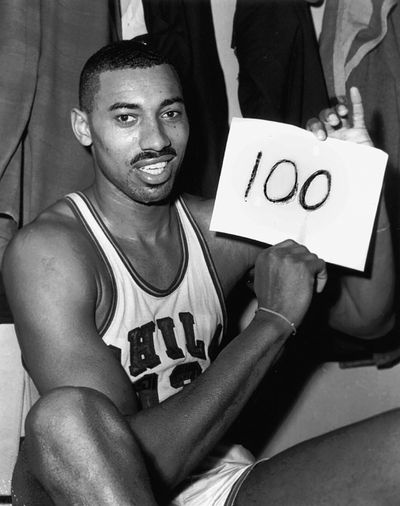
Wilt Chamberlain (1936–1999) – Basketball, United States
There are great athletes, there are legendary athletes, and then there is Wilt Chamberlain.
Standing 7-foot-1 with a combination of size, strength, speed, endurance, and skill that may never be matched, Chamberlain transformed basketball and redefined what was thought possible in sports. His impact extended beyond records and championships. He altered the very structure of the game itself, forcing rule changes at every level while setting standards of athletic dominance that continue to stand more than half a century later.
Born in Philadelphia, Pennsylvania, in 1936, Chamberlain first emerged as a national sensation at Overbrook High School. While basketball made him famous, his athletic gifts extended far beyond the hardwood. He excelled in track and field, posting elite marks in the high jump, long jump, shot put, sprinting events, and middle-distance running. Even among elite athletes, Chamberlain's combination of size and speed was almost unimaginable.
At the University of Kansas, Chamberlain quickly became the most dominant player in college basketball. A two-time All-American, he led the Jayhawks to the 1957 NCAA Championship Game and earned Most Outstanding Player honors in the NCAA Tournament. Opposing teams had no answer for his unique blend of power and agility, prompting rule changes designed specifically to limit his influence. Yet even those changes could not slow his ascent.
When Chamberlain entered professional basketball in 1959, the game entered a new era. During his fourteen NBA seasons with the Warriors, 76ers, and Lakers, he compiled numbers that still seem impossible. He scored 31,419 career points, grabbed 23,924 rebounds, won four NBA Most Valuable Player Awards, captured two NBA championships, earned thirteen All-Star selections, and led the league in scoring seven times.
His most famous achievement came on March 2, 1962, when he scored 100 points in a single game against the New York Knicks—a record that remains one of the most iconic and untouchable accomplishments in sports history. That same season, Chamberlain averaged an astonishing 50.4 points per game, another record that has never been seriously threatened.
Yet Chamberlain was far more than a scorer. He led the NBA in rebounding eleven times, became the league's assist leader in 1968, and evolved into a complete team player. His 1967 Philadelphia 76ers broke the Boston Celtics dynasty and are widely considered one of the greatest teams in basketball history. In 1972, he anchored the Los Angeles Lakers during their record-setting 33-game winning streak and guided them to another NBA championship.
Remarkably, basketball was only part of Chamberlain's athletic legacy.
Following his NBA career, he became one of the most influential figures in the development of professional volleyball in the United States. Competing at a high level in both indoor and beach volleyball, Chamberlain helped bring national attention to a sport that was still fighting for mainstream recognition. His contributions as both a player and ambassador earned him induction into the International Volleyball Hall of Fame, making him one of the rare athletes whose impact transcended multiple sports.
Throughout his life, Chamberlain represented the outer limits of human athletic achievement. He combined the size of a giant with the speed of a sprinter, the strength of a power athlete, and the endurance of a distance runner. His records remain among the most unbreakable in sports, and his influence can still be seen in every dominant big man who has followed in his footsteps.
Wilt Chamberlain was not merely one of the greatest basketball players who ever lived. He was one of the greatest athletes in human history.
For his unparalleled achievements, revolutionary impact on basketball and volleyball, and enduring influence on the world of sports, Wilt Chamberlain rightfully stands among the American Sports Hall of Fame Immortals.

Michael Phelps (1985– ) – Swimming, United States
No athlete in Olympic history has reached the heights attained by Michael Phelps. Across five Olympic Games and a career spanning more than fifteen years, Phelps transformed swimming from a showcase event into a global stage for unprecedented excellence. Through extraordinary versatility, relentless preparation, and unmatched performance under pressure, he established himself as the most accomplished Olympian—and arguably one of the greatest athletes—in the history of sport.
Born in Baltimore, Maryland, Phelps emerged as a prodigy at an early age. At just fifteen years old, he became the youngest male swimmer to represent the United States at the Olympic Games since 1932, signaling the arrival of a generational talent whose impact would soon extend far beyond the pool.
Though his collegiate career at the University of Michigan was brief because of his international commitments, Phelps left a remarkable imprint on NCAA swimming. He captured seven NCAA championships, eleven Big Ten titles, and earned both Big Ten Freshman of the Year and Big Ten Swimmer of the Year honors, demonstrating the versatility that would become his signature.
Yet it was on the world stage where Michael Phelps elevated himself into sporting immortality.
Beginning with his Olympic debut in Sydney in 2000 and culminating in Rio de Janeiro in 2016, Phelps authored one of the greatest competitive runs ever witnessed. He won an astonishing 28 Olympic medals, including 23 gold medals, both records that stand unrivaled. His career reached mythical proportions during the 2008 Beijing Olympics, when he captured eight gold medals in eight events, surpassing Mark Spitz's long-standing record and producing what many regard as the greatest single performance in Olympic history.
Unlike specialists who dominated a single discipline, Phelps mastered nearly every aspect of competitive swimming. He won Olympic gold in butterfly, freestyle, individual medley, and relay events, routinely defeating specialists in their own signature races. His extraordinary range, combined with his ability to excel across multiple events within days of one another, established a standard of versatility never before seen.
His dominance extended beyond the Olympic Games. Competing in the World Championships from 2001 through 2011, Phelps amassed 33 medals, including an all-time record 26 gold medals, further solidifying his status as the sport's ultimate championship performer. Along the way, he set 39 world records, repeatedly redefining the boundaries of human performance.
Even after briefly retiring following the London Olympics, Phelps returned to capture four more gold medals at the 2016 Rio Games, becoming the oldest Olympic champion swimmer in American history at the time and completing one of the most remarkable comeback stories in modern sports.
Off the deck, Phelps became a powerful ambassador for swimming and a leading advocate for mental health awareness. Through the Michael Phelps Foundation and his openness regarding anxiety and depression, he has inspired millions to pursue wellness, resilience, and personal growth beyond competition.
His achievements have earned induction into the International Swimming Hall of Fame and the U.S. Olympic & Paralympic Hall of Fame, while repeated ESPY Awards, Laureus honors, and global recognition have affirmed what generations of fans have witnessed firsthand: Michael Phelps is the standard by which athletic greatness is measured.
Career Highlights
- 28 Olympic Medals (Most in history)
- 23 Gold
- 3 Silver
- 2 Bronze
- Five Olympic Games
- 2000, 2004, 2008, 2012, 2016
- Historic Beijing Olympics (2008)
- 8 Gold Medals
- 8 World Records
- Greatest single Olympic performance in history
- 33 World Championship Medals
- 26 Gold (All-time record)
- 6 Silver
- 1 Bronze
- 39 World Records
- 29 Individual World Records
- NCAA Champion (7 Titles)
- University of Michigan
- Big Ten Champion (11 Titles)
- 8-Time FINA Swimmer of the Year
- Associated Press Male Athlete of the Year (2012)
- Laureus World Sportsman of the Year
- 2009
- 2013
- International Swimming Hall of Fame Inductee
- U.S. Olympic & Paralympic Hall of Fame Inductee
- Most Decorated Olympian of All Time
More than medals, Michael Phelps' legacy is defined by his relentless pursuit of excellence and his ability to perform at the highest level across four Olympic eras. His career changed expectations for what athletes could achieve and elevated the Olympic Games themselves.
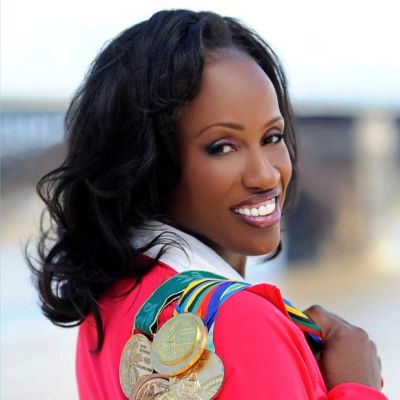
Jackie Joyner-Kersey (1962– ) – Track & Field, United States
Few athletes in history have redefined the limits of human performance as profoundly as Jackie Joyner-Kersee. A transcendent champion whose brilliance spanned more than a decade, Joyner-Kersee elevated women’s athletics to new heights and established herself as one of the greatest all-around competitors the world has ever known.
Born and raised in East St. Louis, Illinois, Joyner-Kersee first emerged as a remarkable multi-sport talent at Lincoln High School, where she excelled in both basketball and track and field. She captured four consecutive National Junior Pentathlon championships and, as a high school senior, reached the finals of the 1980 Olympic Trials in the long jump—offering an early glimpse of the greatness to come.
At UCLA, she became the embodiment of the modern student-athlete. A four-year starter for the Bruins basketball team, she scored more than 1,100 career points and remains one of the fifteen greatest players in school history. Simultaneously, she dominated track and field, winning consecutive NCAA heptathlon championships in 1982 and 1983. Her collegiate accomplishments earned her the prestigious Honda-Broderick Cup in 1985 as the nation’s top female athlete and established her as one of the premier amateur competitors in America.
What followed was one of the most extraordinary Olympic careers in history.
Beginning with a silver medal in the heptathlon at the 1984 Los Angeles Games, Joyner-Kersee embarked on a twelve-year Olympic journey that produced six medals and forever changed the sport. Her crowning achievement came at the 1988 Seoul Olympics, where she captured gold medals in both the heptathlon and long jump. In doing so, she established a heptathlon world record of 7,291 points, a mark that still stands nearly four decades later and remains one of the most enduring records in track and field.
She continued to make history in Barcelona in 1992, becoming the first woman ever to successfully defend an Olympic heptathlon title while also earning a bronze medal in the long jump. Four years later, despite battling a severe hamstring injury, Joyner-Kersee delivered one final unforgettable moment by securing bronze in the long jump at the Atlanta Games on her final attempt.
Her dominance extended beyond the Olympic stage. Joyner-Kersee won four World Championship gold medals and became the first woman in history to surpass the 7,000-point barrier at the 1986 Goodwill Games. At the 1987 Pan American Games, competing before a home crowd, she tied the world record in the long jump with a leap of 7.45 meters, producing one of the most memorable performances in the event’s history.
Yet Jackie Joyner-Kersee’s legacy reaches far beyond medals and records. Through the Jackie Joyner-Kersee Foundation, she has devoted herself to providing opportunities for underserved youth in East St. Louis. Her advocacy, philanthropy, and commitment to community have made her a role model for generations of athletes around the world.
In 2004, she was inducted into the United States Track & Field Hall of Fame, and historians, athletes, and sports authorities alike have consistently recognized her among the greatest female athletes—and greatest all-around athletes—of the twentieth century.
Career Highlights
- Six Olympic Medals
- 3 Gold
- 1 Silver
- 2 Bronze
- Olympic Champion
- Heptathlon (1988, 1992)
- Long Jump (1988)
- Olympic Silver Medalist
- Heptathlon (1984)
- Olympic Bronze Medalist
- Long Jump (1992, 1996)
- Four-Time World Champion
- Heptathlon (1987, 1993)
- Long Jump (1987, 1991)
- Three-Time Goodwill Games Champion
- Pan American Games Gold Medalist
- World Record Holder – Heptathlon
- 7,291 points (1988)
- Record still stands
- American Record Holder – Long Jump
- 7.49 meters
- First Woman to Break 7,000 Points in the Heptathlon
- James E. Sullivan Award Winner (1986)
- Two-Time Jesse Owens Award Recipient (1986, 1987)
- Honda-Broderick Cup Winner (1985)
- U.S. Track & Field Hall of Fame Inductee (2004)
- Named the Top Woman Collegiate Athlete of the Past 25 Years by the NCAA
From the playgrounds of East St. Louis to the pinnacle of Olympic glory, Jackie Joyner-Kersee forged a legacy defined by versatility, perseverance, and excellence.
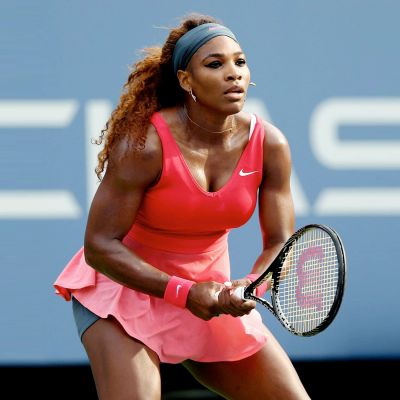
Serena Williams (1981– ) – Tennis, United States
Few athletes in history have transformed their sport as profoundly as Serena Williams. Across a remarkable twenty-seven-year professional career, Williams established a standard of excellence defined by power, resilience, longevity, and an unrivaled ability to perform under pressure. A 23-time Grand Slam singles champion, four-time Olympic gold medalist, and former World No. 1, she emerged not only as the dominant player of her era, but as one of the greatest competitors ever to step onto any field of play.
From her professional debut in 1995 to her retirement in 2022, Serena Williams authored one of the most extraordinary careers in the history of sport. Her rise from a teenage prodigy to a global icon redefined women’s tennis and elevated the game to new levels of athleticism and worldwide popularity.
Her greatness was forged on the sport’s grandest stages. Williams captured an Open Era record 23 Grand Slam singles titles, winning major championships across three different decades and reaching an astonishing 33 Grand Slam finals. Twice she accomplished the legendary “Serena Slam,” holding all four major championships simultaneously. Her dominance extended across every surface and every era, defeating multiple generations of champions while maintaining elite performance deep into her thirties.
At the height of her powers, Serena’s serve and explosive baseline game revolutionized women’s tennis. Her combination of athleticism, tactical intelligence, and mental toughness forced an evolution in the sport itself, raising the physical and competitive standards for future generations.
Williams’ supremacy was equally evident in the rankings. She spent 319 weeks as World No. 1, including 186 consecutive weeks, and finished five seasons atop the rankings. Over her career she amassed 73 WTA singles titles, establishing herself as one of the most accomplished players in tennis history.
Her brilliance extended beyond the Grand Slam stage to Olympic competition. Alongside her sister Venus, she formed one of the greatest partnerships in sports history, winning doubles gold medals in Sydney and Beijing. At the 2012 London Games, Williams achieved one of the rarest feats in Olympic tennis history, capturing both singles and doubles gold. She remains the only player in the Open Era to complete a Career Golden Slam in both singles and doubles, a distinction that underscores her unparalleled versatility and championship pedigree.
Even in the later stages of her career, Williams continued to make history. In 2017, at age thirty-five, she won the Australian Open, becoming the oldest Grand Slam singles champion of the Open Era and demonstrating a longevity matched by few athletes in any sport.
Yet Serena Williams’ legacy extends far beyond victories and trophies. As a cultural icon, entrepreneur, advocate, and role model, she expanded opportunities for women and inspired generations of athletes around the world. Her influence transcended tennis, making her one of the most recognizable and impactful figures in modern sports.
Her extraordinary achievements have earned universal recognition, and history has firmly established her among the greatest athletes—male or female—of all time.
Career Highlights
Grand Slam Excellence
- 23 Grand Slam Singles Titles (Open Era Record)
- 7 Australian Open titles
- 3 French Open titles
- 7 Wimbledon titles
- 6 U.S. Open titles
- 33 Grand Slam Singles Finals
- 39 Grand Slam Titles Overall
- 23 Singles
- 14 Women's Doubles
- 2 Mixed Doubles
- Two-Time "Serena Slam"
- Held all four major titles simultaneously
Professional Success
- 73 WTA Singles Titles
- 23 WTA Doubles Titles
- 858+ Career Match Victories
- Five-Time WTA Finals Champion
- 23 WTA 1000/Premier Mandatory Titles
World Rankings
- World No. 1 for 319 Weeks
- 186 Consecutive Weeks at No. 1
- Five Year-End No. 1 Rankings
- 2002, 2009, 2013, 2014, 2015
Olympic Achievements
- Four Olympic Gold Medals
- Sydney 2000 – Doubles
- Beijing 2008 – Doubles
- London 2012 – Singles
- London 2012 – Doubles
- Only Open Era Player to Complete a Career Golden Slam in Both Singles and Doubles
Historic Distinctions
- Most Grand Slam Singles Titles of the Open Era
- Oldest Grand Slam Singles Champion
- 2017 Australian Open (Age 35)
- Champion Across Three Different Decades
- Career Prize Money Leader at Retirement
- More than $94 million
Awards and Recognition
- 12 ESPY Awards
- 10× Best Female Tennis Player
- 2× Best Female Athlete
- TIME 100 Most Influential People
- Widely recognized as one of the greatest athletes in sports history
Serena Williams changed tennis forever. Through unmatched power, extraordinary longevity, and an unbreakable competitive spirit, she inspired millions and redefined what greatness looks like. Her legacy extends beyond championships and records—it lives in every athlete who dares to dream bigger because she showed what was possible.
